Myron Lysenko: ‘If we lose this war, we’re going to lose our country, our language and our culture….’

Myron Lysenko, in conversation with Tina Giannoukos on 3CR Spoken Word this morning, Thursday 27th Oct 2022.

“A lot of the Ukrainian people believe that we will win the war, even though we’re fighting against extreme odds. If we lose this war, we’re going to lose our country, our language and our culture so it’s very important to us.

“As a Ukrainian, I was brought up to always think of Ukraine as my homeland. When I went to school people would say, you know, you’re not Ukrainian because you were born in Australia.

“And I went home and I said to my father, ‘What do I do Dad? They’re saying I’m not Ukrainian, they’re saying I’m Australian!’

He said, ‘Well you go back to your school and say, “If a horse is born in a pig pen, does that make a horse a pig?”‘ 

‘I’m Ukrainian, and always will be…. ‘

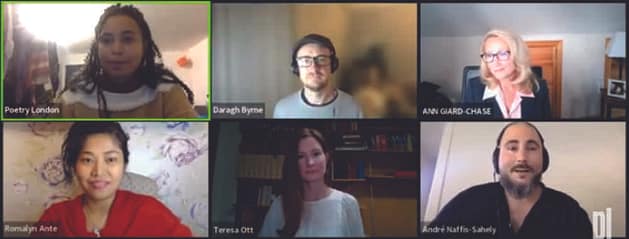
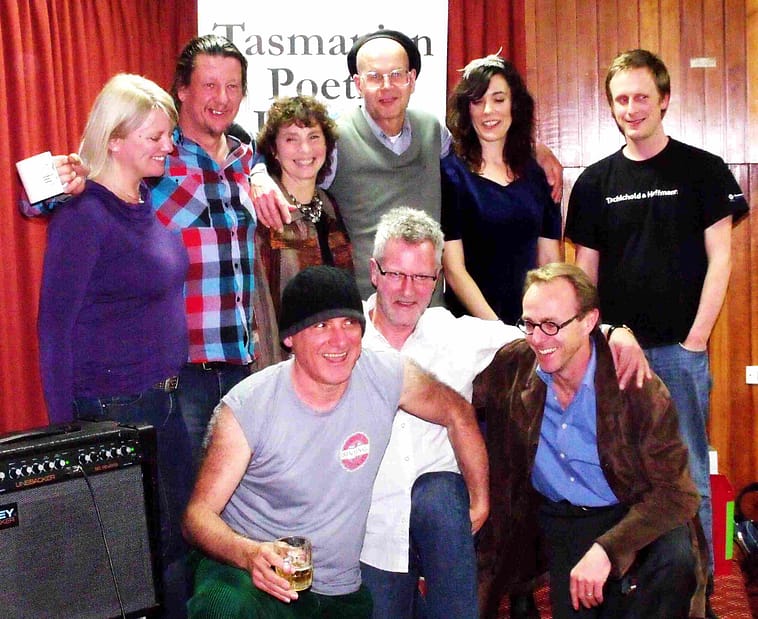
Myron Lysenko (back row, second from left)—Tasmanian Poetry Festival 2010


All their information was fifth-hand….

[Joan Didion: from ‘South and West’ (pg 34)] 

“You-all ought to come visit with us,” a third woman said. They were all young women, the oldest among them perhaps thirty.  “I’d play organ for you.”

“We’ll never get up there,” the first woman said. “I never been anyplace I wanted to go.”

(and, a couple of paragraphs lower down the page)

“The isolation of these people from the currents of American life in 1970 was startling and bewildering to behold. All their information was fifth-hand, and mythicized in the hand down. Does it matter where Taos is, after all, if Taos is not in Mississippi?”


Alice Allan—3CR’s ‘Spoken Word’

It was good hearing poet and podcaster Alice Allan in conversation with 3CR’s Waffle IronGirl on the ‘Spoken Word’ show, on the 20th October 2022.

Alice has published a couple of poetry titles—’The Empty Show’ (Rabbit Books), and the chapbook ‘Blanks’ (Slow Loris)—but considers herself primarily a podcaster. She produces the weekly podcast ‘Poetry Says’, an entertaining, erudite, often funny podcast with interesting writers—including Cassandra Atherton, Bonny Cassidy, Pam Brown, John Kinsella, Alison Whittaker, Ellen van Neervan, among others. Currently the podcast series has reached episode 197, it’ll be interesting to learn in due course, her plans for episode 200.

Alice notes the show has ‘evolved’.

‘Yeah. Well, I started it very much as a poetry beginner, six years ago, I think I’m even more of a beginner now than I was then’. She says she now fully understands the scope of what she took on back in 2016—back then, she had no idea. ‘I think it’s evolved because I can ask my guests better questions. I think I’ve grown a bit as an interviewer, and I can see the conversation more effectively now.’ 

What she loves most about putting the show together is that she gets to introduce people to poets beyond the bios that you’d find, for instance, in the back of Black Ink’s annual ‘Best Australian Poems’, (2003 to 2018). Previously she’d felt the world of poetry closed off to her, but these days ‘when I get to invite people onto the show, get to hear them um and ahh, laugh and make fun of themselves and read their poems in their own voice, that really excites me. I think about the version of myself where I started back in 2007. Understanding that these are people just like you and me.’

Asked by compere Waffle IronGirl about honesty and letting yourself ‘show’ … and about ‘perhaps even the dreaded word— (though) maybe dreaded only by me—authenticity,’ Alice responded appreciatively that she loved ‘that you underscore how difficult that word is—”authenticity”‘.

‘I’m playing a role to start with as the host,’ she explained, ‘but also with each interviewee. I come with a set of expectations, I often come with a lot of fear. I hope I’m getting better at digging a little bit deeper with people.’ (Here Allan remains customarily—but unnecessarily, in my opinion—modest; the relaxed and intimate podcast environment of ‘Poetry Says’ has triggered many delightfully ruminative exchanges—the following, for example, from a 2019 interview with poet Bonny Cassidy:

ALLAN: I remember talking to you around the time that Chatelaine was about to come out and you talked about feeling a certain level of separation from the work, even at that stage. I totally understand that now, with my own collection on the verge of coming out, it feels … so far away. And it’s a weird thing because you have this moment where it all publicly culminates, but actually in your world….

CASSIDY: It’s old news…

ALLAN: … it’s kind of over! So how do you feel about your three books?

CASSIDY: I think I’ve come to really own past work the past few years, such that it always feels very present to me. I’m very proud of it even though to me it is old and belongs to a certain phase of my writing, particularly with formative work, like when I look at Certain Fathoms now … there was a time when I’d look back on it and go … aaagh, I wish I could go back and revise it; or, hope no-one reads that now.

And I kind of got to a point where I thought, you really have to come to terms with that Bonny, you’ve got to stop looking at your first book and a) being so hard on it, and b) not really seeing it for what it is. I spent some time re-reading it and thinking ohh, okay, I see the DNA that goes from the first book through to the second and the third. And I honour that. Without that book, I wouldn’t have written the second one, without the second one I wouldn’t have written the third one, there’s this interdependency.… You can’t just cut it off and go, oh that was me then and let’s not talk about that now, that’s irrelevant. It’s not at all! It’s totally relevant. It’s an artefact, but … it’s something I made with thought and purpose, and it’s informed later work. It’s informed the ways that my three-and-a-half readers (laughs) might see my writing….

So I’m really fond of all the books, really fond of them. I don’t go back and re-read as a matter of course. I did think recently of doing that and maybe just setting aside a day—you know, maybe just spend this with my own words. I spend so much time consuming other people’s words day in, day out, maybe I should go back and just sit with my own, and be a reader of myself.

Roland Barthes has this statement about how the author can certainly go back to their own text, but they will only ever do so as a guest. And I really like that idea of going back and … you know … visiting your own work, and taking pleasure in it as a visitor—rather than going back with a cringe, or going back and seeing it as a kind of inscription of yourself. It’s not a tombstone!)

On the state of poetry and spoken word as it stands in Australia, Alice Allan says she’d ‘love for there to be more fun, love for us to play and laugh more’. She feels ‘very allergic personally’ to a serious strain she sees running through Australian poetry. ‘I don’t mind if it’s there. But I do mind if it’s all that’s there. I’m excited to see those moments where spoken word starts to inform poetry that purely exists on the page, by which I mean when we have a poet who is not thought of as—quote unquote—a spoken word poet, get up there and deliver their work in a way that cares about the audience. Don’t see that very often, though.’ 

Asked of what might be missing or deficient from the Australian podcasting scene, Alice is adamant: much is missing. ‘We need many, many more female voices. We need many, many more voices from people of colour.’ She recommends people check out the Barron Field experience, being made by Justin Clemens and his friends out of the Melbourne School of continental philosophy. ‘That show is nuts. Just three philosophers yelling at each other for way too long. And it’s fantastic. I want more shows like that, I want less production!’

And on the question of recommended reads, she singled out Eleanor Jackson’s ‘Gravidity and Parity‘ (Vagabond Press), a title that was shortlisted for the Small Press Network Book of the Year in 2022, and highly commended in both the 2022 Victorian Premier’s Literary Awards and the ASAL Mary Gilmore Award 2022. (‘As soon as I opened it and realized what she was doing, I was like, oh, hold the phone…. Yeah, it really blew me away!’); along with Harry Reid’s ‘Leave Me Alone‘ (‘I came to that book with exceptionally high expectations. And Harry has not let me down.’) She’s also had the chance to chat with Tracy Ryan a couple of months ago. ‘And I read pretty much everything of Tracy’s I could get my hands on in preparation, including “Rose Interior“, her tenth collection, out this year. She’s really a poet working at the height of her powers.’

Episodes of ‘Poetry Says’ are online at Poetry Says. 3CR’s interview with Alice Allan is online at Spoken Word.
Silvana Estrada, ‘La Corriente’ from the album ‘Marchita’ [Jan 2022]

Mexican musician Silvana Estrada—‘La Corriente’

[Thom Jurek, ALLMUSIC]—”…’Marchita’ is steeped in tradition but far from traditional. This album makes use of her entire musical background, including indie pop, classical, jazz, and Latin American folk traditions. It is rendered simply and directly, deeply influenced by the poetic tradition of women composers including Chavela VargasVioleta Parra, and Soledad Bravo.”

26th Oct: Robbie Arnott & David Whish-Wilson in conversation—Hobart

Robbie Arnott (author of ‘Limberlost’) and David Whish-Wilson (‘The Sawdust House’) in conversation about their new books.

Hobart Bookshop, 5:30 pm Wednesday 26th October


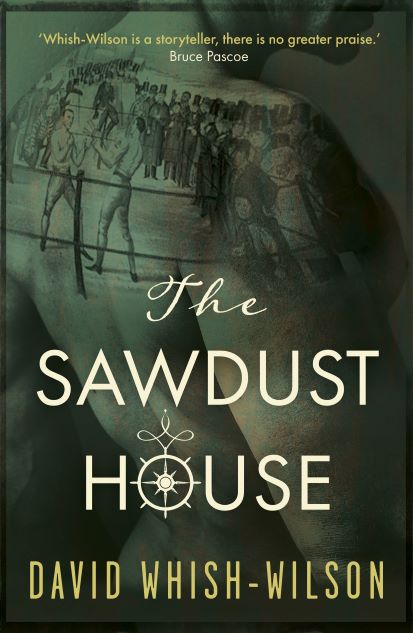
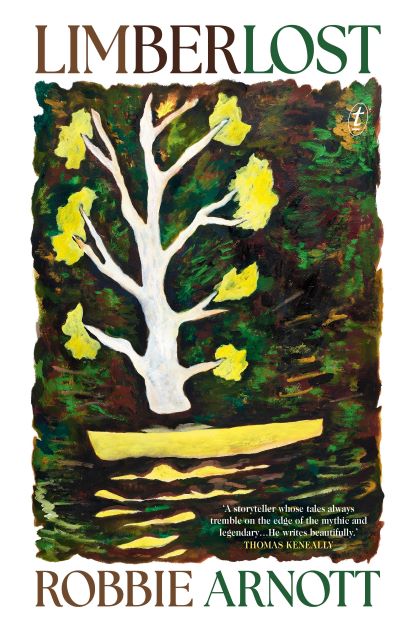
This is a double Author Event with David Whish-Wilson and Robbie Arnott talking to each other about their newly released books The Sawdust House and Limberlost.

The Sawdust House is a historical fiction set in San Francisco, 1856. Based on the true story of Australia’s first major sporting export, Irish-born James ‘Yankee’ Sullivan, a ‘notorious man’ formed in the crucible of the Australian convict system. Incarcerated by the Committee of Vigilance and watching his fellow prisoners being taken away to be hanged the convict tells a story of triumph and tragedy: of his daring escape from penal servitude in Australia; how he became America’s most celebrated boxer; and how he met the true love of his life.

In Tasmania in the heat of a long summer, Ned hunts rabbits in a river valley, hoping the pelts will earn him enough money to buy a small boat.  His two brothers are away at war, their whereabouts unknown. His father and older sister struggle to hold things together on the family orchard, Limberlost.  Desperate to ignore it all, Ned dreams of open water.  Ned’s choices that summer come to shape the course of his life, the fate of his family and the future of the valley, with its seasons of death and rebirth.

David Whish-Wilson is the author of eight novels and three creative non-fiction books. He has been shortlisted for the Ned Kelly Award on multiple occasions and Sawdust House was recently long listed for the 2022 ARA Historical Fiction Prize.

Limberlost is Robbie Arnott’s third novel after his acclaimed debut, Flames (2018), and Miles Franklin shortlisted The Rain Heron (2020).  Robbie Lives in Hobart.

About the event:

This is a ticketed event ($5.00) being held at The Hobart Bookshop on Wednesday the 26th October, where tickets include a complimentary glass of wine.


Francesca Haig’s new historical novel ‘Salt Blood’

October 10, 2022

Bloomsbury has pre-empted Salt Blood by poet Francesca Haig, a historical novel about the infamous 18th-century pirate Mary Read, in a six-figure deal.

Publishing director Emma Herdman signed UK and Commonwealth rights, excluding Canada and including audio, from Juliet Mushens at Mushens Entertainment in a two-book deal. Haig will be writing as Francesca de Tores. The book is slated for publication in spring 2024 and will be accompanied by a “major” marketing and publicity campaign.

Read more at ‘The Bookseller’

Rachel Edwards, Francesca Haig

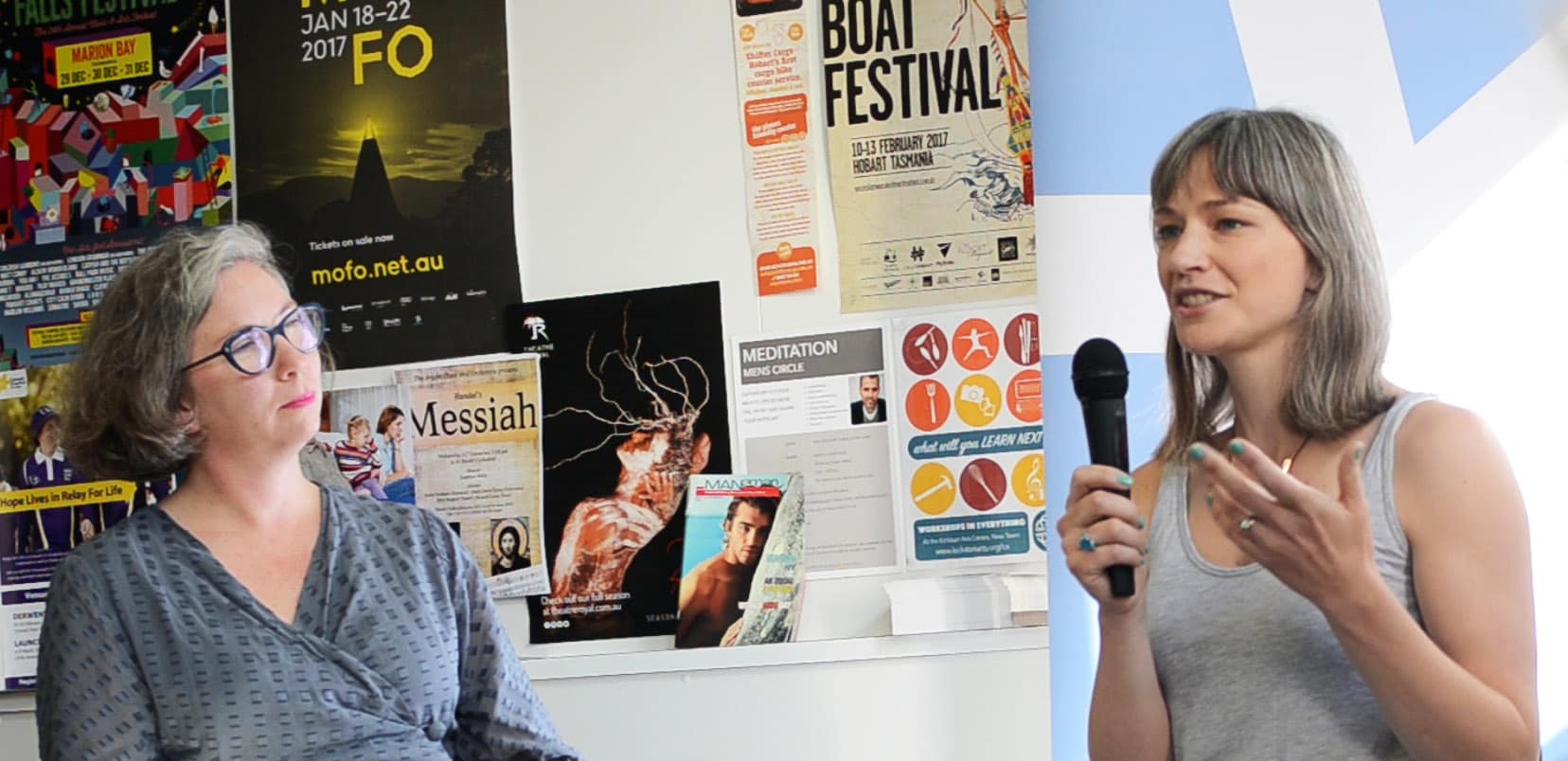
Rachel Edwards (left) in conversation with Francesca Haig—Fullers Bookshop, Hobart, 14th Dec 2016

The madman….

There’s a character in Anuradha Roy’s novel ‘Sleeping on Jupiter’. He’s mad, has no money, sleeps wherever he can find shelter. He cultivates a twig, plants it in the sand by the ocean, waters it with seawater, moves it to higher ground when the tide comes in and waves threaten his ‘plant’.

And then there’s another of her characters, the stallholder Johnny Topo.

The other day he had been gazing at the madman watering his dry twig and then making his day-long sorties into the water when he had abandoned his stall and printed off in daft pursuit. He wasn’t thinking, he hadn’t planned it, it was the end of a tiring stint, almost night, and there he was, racing the lunatic into the froth and back again, shouting nonsense, and then the two of them had laughed like hyenas and pissed into the sea side by side.

She’s a special talent, Anuradha….

Small Press Network: 2022 Book of the Year Award—Shortlist

This year’s shortlisted titles for Small Press Network’s Book of the Year Award have been announced. They are:

The BOTY 2022 winner will be presented in partnership with the Wheeler Centre as part of its Next Big Thing series, on 25 November 2022 at 6:30 pm. You can find the event details here.

I mention this in part cos it reminds me of entering Pete’s book in the award a couple of years ago, (and it won). I was asked to write something for use as part of the award presentation. I suggested yes I could (see below) but that I’d feel less comfortable reading it live. That’s okay, we can take care of that, I was told. (In the event, what I wrote was way too long and just a short segment was used)….

As to Pete….

One evening some years ago I was driving a taxi late at night, parked down in the vicinity of Hobart’s waterfront. Two women – tourists from New Zealand, I was to learn — climbed into the cab. They’d attended a literary event an hour or two earlier. They were cheerful and relaxed and happily exchanged literary perceptions of the evening in the comfort of the back seat of the vehicle. Generous and inclusive, they invited me to share their conversation, to which I responded by noting that for many Tasmanian writers —particularly those who wrote of the environment — a closer affinity was felt with the landscape of New Zealand than with the ‘… sunburnt country, A land of sweeping plains’ of Dorothea Mackellar’s Australia.

The pair asked if I could suggest the name of a praiseworthy Tasmanian writer, someone who’d perhaps slipped under their radar back home in New Zealand. I mentioned Pete, describing him as a poet and essayist and one of our country’s most respected environmentalists. Of the many reasons I might have offered in an appreciation of Pete’s work, I settled for just one — the fare was only running Salamanca to New Town, after all — and that was ‘generosity’. And I tried in my own words to recall for them a conversation years past when Pete had suggested ‘I don’t write because I think I’ve profound truths that other people would benefit from having exposure to. I don’t write to provide anyone with answers, I write to provide people with dilemmas. My essays – even my poetry lately – are written to set up tensions that are ultimately not resolved. I explore the tensions, but I don’t conclude.’

For their benefit, I’d have also mentioned — if the words had come to mind — Richard Flanagan’s support for Pete’s previous essay collection, Vandiemonian Essays, wherein Richard wrote, ‘All (these essays) are written with wit and without fear, with an erudition lightly worn, and with a pen dipped in a large love of this world. All can be read with both joy and curiosity… ’

It’s Richard’s allusion to ‘joy and curiosity’, coincidentally, that I’d recommend as an approach to Pete’s current essay collection, ‘Forgotten corners’ — that, along with an openness to being challenged, informed and entertained.

***

As the cab pulled to a stop, one of the women turned to me, remarking ‘I know it’s eleven-thirty in the evening, but I’m about to jump on the internet and learn a little more about Pete Hay — right now!’

The other leaned in towards me. ‘And I guarantee it, she will!’

‘See Me’ (referencing Martin Edmond’s blog ‘Isinglass’)

An extract from a post by Martin Edmond who continues to blog of exquisite abstractions:

…. Dylan goes on to sing: ‘Everybody that I talked to had seen us there / Said they didn’t know who I was talking about’ which is kind of apposite to my own attempts to re-visit the past, which tend to dissolve into phantoms and whispers, to two word sentences that no longer mean exactly what they say, that rely upon the intonations of beloved voices, now no longer with us, in order to be understood at all.