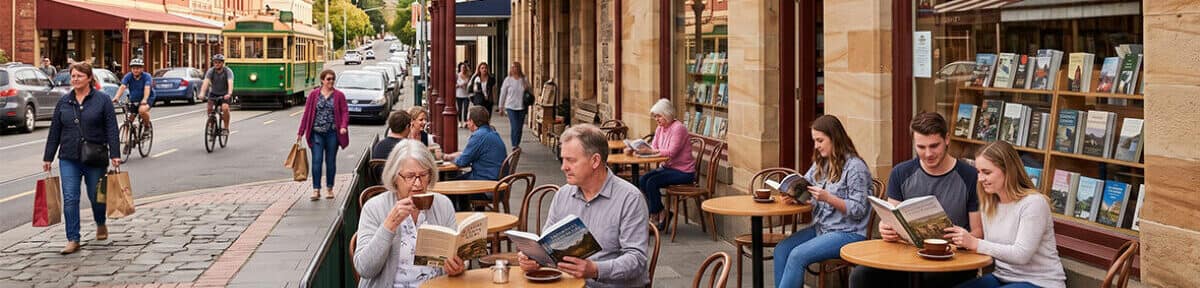
Kathryn Schulz’s ‘Lost & Found’

Have read, then partially listened to, an interview (dated 30th may 2025) in the New York Times recently with Kathryn Schulz, a staff writer with The New Yorker and a winner of the Pulitzer Prize . She’s interviewed by Ezra Klein about her 2022 book, ‘Lost & Found’.

Eighteen months before Kathryn Schulz’s beloved father died, she met the woman she would marry. In Lost & Found, she weaves the stories of those relationships into a brilliant exploration of how all our lives are shaped by loss and discovery-from the maddening disappearance of everyday objects to the sweeping devastations of war, pandemic, and natural disaster; from finding new planets to falling in love.

There are many memorable moments within this interview. Kathryn Schulz is a gifted conversationalist (though not to the same degree as her father, apparently, who ‘could talk me under the table’), and Klein has prepared his questions well. The interview’s behind a paywall I assume, but let me quote just one question and response (and recommend you seek out Kathryn’s work online):

Is there an experience that comes to mind for you recently, where you were looking at something small and you saw something big in it — or big and you saw something small in it?

Sure. I’m going to tell a story that sounds like it can’t possibly be true, and I swear it is.

What you need to know by way of context for this story is that a year or so ago, my partner and I bought the house across the street from the farm where she was born and raised, and where her parents still live. We’ve been gradually renovating it ever since then and were incredibly excited to move in and to be near family and, frankly, near more child care.

We finally move in, and I’m reveling in this beautiful new home as we settle in. Then — this is only a week ago — my daughter, who’s now 3½ — we have these beautiful fields outside of our house, and she wanders off into the field and returns with a stalk of wheat and says: Look, Mama. So I’m thinking: Oh, she found a stalk of wheat — fun! Children pick up everything, right? Clovers, coins, anything muddy, tarantulas — whatever they can find.

So she hands me this stalk of wheat, and I’m thinking: Oh, how sweet, she gets to live in this beautiful setting where the outdoors is full of so many wonderful little things for her to study. Then she looks at me very seriously and says: Mama, we should use this wheat to make bread for people who don’t have any.

It’s just one of those moments as a parent, where, on the one hand, you’re just so in love with your child. You think: Who made this remarkable mind?

I’m sitting there thinking she found a pretty flower or something, and there she is apparently thinking about the poor and privation and need. So right away my sense of the scale of what we were talking about just wildly shifted.

But also, to be honest, right alongside feeling overwhelming awe for her, I felt so morally indicted. I am literally in the middle of reveling in my pretty new kitchen, and then suddenly, I’m confronted with real hunger in the world, and I’m thinking: Why do I have this beautiful backsplash? What have I done here? My 3-year-old has more moral clarity than I do about how we should spend our money and our time and what actually matters in life.

So, yes, in a wonderful way, I feel like my world is full of discoveries that seem small and blossom out into the enormous. Or seem enormous and then have some kind of bearing on small, practical things, like how to be a family and how to raise children. It’s often incredibly humbling. And sometimes it’s very funny, and sometimes it’s very moving. In that case, it was all the above.

The book’s available at Readings Bookshop in Melbourne, costs $34.99.

Annie March’s ‘Eirenikon: Dictionary of a Reimagined Culture’

Tasmanian author Eleanor Vaughan, has released her fifth book, Eirenikon: Dictionary of a Reimagined Culture, under the name Annie March.

A fledgling glossary exploring the whole, healed, holy, ecozoic culture I dream of bequeathing my grandchildren – all of them – sea-eagle eggs, Huon pine saplings, spawning phytoplankton, clear rivers running free…

Excerpt: Chapter 21. TRANSFORMING

LEXICON

apocatastatistics the study of possibility of salvation/enlightenment for all sentient beings

aptosis a petal transforming even as it falls; programmed cell death

enantiodromia the dynamic tendency of the psyche to divide into opposing energies and personalities which are constantly reversing (Greek)

entelechy the dynamic culmination of purposive flowering; the entelechy of an acorn is an oak tree

eucatastrophe an unexpected, sudden, favourable outcome to a chaotic situation

gwairli a graced failure; crack admitting light (Thalassan)

heretic one whose beliefs do not conform to social or religious norms (haeresis the act of choosing; a set of principles: Greek)

heyoka a holy fool who upturns the accepted order, mocks authority, breaks down the barriers; a sacred opening which allows healing and transformation (Sioux)

kahawaii small stream that can move boulders (Hawaiian)

liminar an edge-dweller (limen threshold: Latin)

mandorla in Western art, the mandorla is the almond-shaped aureola framing Christ or Mary. Jungian Robert Johnson has reinterpreted it as the space between two overlapping circles which binds together something torn apart, enables the reconciling of two irreconcilables. As transformation happens, the overlap shifts from a sliver of new moon to the two circles becoming one. In the Hindu tradition, the mandorla is the yoni (vagina)

maverick one who doesn’t conform, a rebel, a stray

metamorphosis radical change in form, as in acorn to oak tree, tadpole to frog; shamanic ability to shape-change into another form

metanoia a radical change of mind or heart

morphallaxis regeneration in a changed form


…I am done with great things and big things; great institutions and big success, and I am for those tiny, invisible, molecular moral forces that work from individual to individuals, creeping through the crannies of the world like so many soft rootlets, or like the capillary oozing of water.

– William James

Theory of Dissipative Structures – Transformation Theory

According to Ilya Prigogine’s brilliant theory, dissipative structures are open systems, maintained by continuous dissipation and consumption of energy, as water simultaneously flows through and creates a whirlpool: a flowing wholeness, highly organised and always in process. The more complex the structure, the more energy is needed to maintain connections, and the system is very vulnerable to fluctuations. Because the connections are sustained by the flow of energy, the system is always in flux. Paradoxically, the more coherent and intricately connected the structure, the more unstable it is: increased coherence equals increased instability. This very instability is the key to transformation: the dissipation of energy creates the potential for sudden reordering. Movements of energy create fluctuations, which, if they reach a critical size, perturb the system; elements of old patterns connect in new ways. The parts reorganise into a new whole. The system escapes into a higher order.

Peter Levine, in Waking the Tiger, uses a whirlpool as a metaphor for trauma trapped in the body/mind. The psyche responds by generating a counter-vortex. Connecting the two in a figure-of-eight – gently, slowly – enables the trapped energy to dissolve, resolve and the whirlpools to release back into the current.

If I knew how an oak tree gets into an acorn and back out again, perhaps, just perhaps, I’d be approaching wisdom.

What ultimately causes a paradigm to change is the accumulation of anomalies.

– Thomas Kuhn

And when we design ecologically we preserve diversity, work on solar income, live harmoniously within larger patterns, eliminate waste and account for all costs. Designing ecologically requires a recalibration of human intentions with biophysical realities in ways that enhance the regenerative capacities of both human and ecological systems.

– David Orr

Neurofeedback – a tool of personal and cultural transformation? Seventy years of drowning not waving; crippled with unremitting, at times paroxysmal fear; periodic descents into the hell of clinical depression; steady-state exhaustion; no technique nor therapy left unturned. And now, after three years of neurofeedback (which doesn’t make change happen, but enables the brain to harness its innate neuroplasticity), I’m robust, resilient, confident, authentic, spontaneous, energetic; I sleep like a baby; anxiety is vestigial. Reborn (almost) as I embark on my seventy-seventh year? Alleluia…

What causation is involved when the Berlin Wall suddenly falls down, Apartheid comes to an end, peace blooms in Ireland?

I’m fascinated by the ways that in fiction (in the hands of a skilled and ethical writer, another name for truth) it’s invariably a mythic transaction that precedes outer change: in Tolkien’s Middle-Earth, the Ring must be destroyed before peace can take root; in Ursula Le Guin’s Earthsea, the mending of the Ring of Erreth-Akbe underpins and catalyses the healing of the realm; in Susan Cooper’s The Dark is Rising, the Signs must be rejoined and the Grail found in order to restore hope to humankind. Patricia A. McKillip explores this exquisitely in The Tower at Stony Wood: a woman, by embroidering in a tower the images she sees in her mirror, is an unwitting, potent agent of liberation and transformation.

Annie March – 'eirenikon'

Eirenikon: Dictionary of a Reimagined Culture is available through any bookshop.

For more information, see https://www.anniemarch.com/eirenikon

Small Press Network: 2022 Book of the Year Award—Shortlist

This year’s shortlisted titles for Small Press Network’s Book of the Year Award have been announced. They are:

The BOTY 2022 winner will be presented in partnership with the Wheeler Centre as part of its Next Big Thing series, on 25 November 2022 at 6:30 pm. You can find the event details here.

I mention this in part cos it reminds me of entering Pete’s book in the award a couple of years ago, (and it won). I was asked to write something for use as part of the award presentation. I suggested yes I could (see below) but that I’d feel less comfortable reading it live. That’s okay, we can take care of that, I was told. (In the event, what I wrote was way too long and just a short segment was used)….

As to Pete….

One evening some years ago I was driving a taxi late at night, parked down in the vicinity of Hobart’s waterfront. Two women – tourists from New Zealand, I was to learn — climbed into the cab. They’d attended a literary event an hour or two earlier. They were cheerful and relaxed and happily exchanged literary perceptions of the evening in the comfort of the back seat of the vehicle. Generous and inclusive, they invited me to share their conversation, to which I responded by noting that for many Tasmanian writers —particularly those who wrote of the environment — a closer affinity was felt with the landscape of New Zealand than with the ‘… sunburnt country, A land of sweeping plains’ of Dorothea Mackellar’s Australia.

The pair asked if I could suggest the name of a praiseworthy Tasmanian writer, someone who’d perhaps slipped under their radar back home in New Zealand. I mentioned Pete, describing him as a poet and essayist and one of our country’s most respected environmentalists. Of the many reasons I might have offered in an appreciation of Pete’s work, I settled for just one — the fare was only running Salamanca to New Town, after all — and that was ‘generosity’. And I tried in my own words to recall for them a conversation years past when Pete had suggested ‘I don’t write because I think I’ve profound truths that other people would benefit from having exposure to. I don’t write to provide anyone with answers, I write to provide people with dilemmas. My essays – even my poetry lately – are written to set up tensions that are ultimately not resolved. I explore the tensions, but I don’t conclude.’

For their benefit, I’d have also mentioned — if the words had come to mind — Richard Flanagan’s support for Pete’s previous essay collection, Vandiemonian Essays, wherein Richard wrote, ‘All (these essays) are written with wit and without fear, with an erudition lightly worn, and with a pen dipped in a large love of this world. All can be read with both joy and curiosity… ’

It’s Richard’s allusion to ‘joy and curiosity’, coincidentally, that I’d recommend as an approach to Pete’s current essay collection, ‘Forgotten corners’ — that, along with an openness to being challenged, informed and entertained.

***

As the cab pulled to a stop, one of the women turned to me, remarking ‘I know it’s eleven-thirty in the evening, but I’m about to jump on the internet and learn a little more about Pete Hay — right now!’

The other leaned in towards me. ‘And I guarantee it, she will!’

Vale Hilary Mantel

British author Hilary Mantel, who won the Booker Prize twice for the first two books of her Wolf Hall trilogy, has died aged 70.

I confess to not being familiar with her work, but her obituary speaks of her capacity for the historical novel—including the Wolf Hall trilogy wherein she writes of the 16th Century during the time of King Henry VIII and Thomas Cromwell. (Hans Holbein the Younger painted the portraits of many characters of English history of this period including both King Henry VIII and Cromwell, hence my interest).

‘The Times’ remarks on her writing….

We hacks, even us literary ones, like to think of ourselves as a hard-bitten bunch, but the news that Hilary Mantel had died aged 70 knocked us back. What a woman, what a writer. Those of us who have read her Wolf Hall trilogy, all 2,000 pages, will feel it
particularly keenly. 

The Wolf Hall trilogy
It feels unlikely that there are many readers out there who haven’t yet been swept up by the bloody brilliance of the Thomas Cromwell trilogy. Across three hefty novels, Mantel conjured up the splendid, tyrannical court of Henry VIII through the shrewd eyes of Thomas Cromwell, the blacksmith’s son from Putney who rose and rose to the King’s right hand. Until Mantel, history remembered Cromwell as a butcher but she made him real — brilliant, humane, ruthless. The trilogy comprises ‘Wolf Hall’ (2009), ‘Bring Up the Bodies’ (2012) and ‘The Mirror & the Light’ (2020).

It’s interesting though, to read—in the comments column accompanying ‘The Times’ article—the varied responses to news of her death. These range from

‘A tragic loss, she was a wonderful writer and not afraid of controversy’, to

‘she failed the basic test of the historical novelist, namely to portray convincingly the interior lives of people who lived a long time ago’, and

‘Patrick O’Brian is a far better master of history’, and

‘Her misrepresentation of St. Thomas More, who died for his beliefs at the hand of the murderous Henry VIII, is a prime example. I wonder how many readers of “Wolf Hall” came away believing More actually was the corrupt villain she created.’

Food for thought…. (Have ordered the first book of the trilogy through the library).

Book extract, Tad Friend’s ‘In The Early Times’

from ‘Literary Hub’, May 11th 2022

When Day poisoned his tea with five heaping spoon­fuls of sugar, Addison warned him that his teeth would fall out and that he’d get diabetes—one of her periodic pub­lic service announcements denouncing meat, cigarettes, and hypocrisy. He just scowled at her. She scoops out half his sugar when he’s not looking, but he recoups it later in cookies. He doesn’t fret about getting diabetes because he has leukemia, and he doesn’t fret about having leukemia because he is determined to be a stoic, and he doesn’t fret about failing to be a stoic because he doesn’t always remem­ber that that’s what he’s supposed to be.