Andy Jackson, interview with Advocacy for Inclusion (28th Nov 2023)

Thoughtful responses from poet Andy Jackson, interviewed by Rob from Advocacy for Inclusion (28th Nov 2023), online at Buzzsprout.

Rob, discussing Andy’s poetry collection Human Looking

The poem that really struck me that I sat with for quite a bit was separation, and for me it spoke of the violence of surgical intervention and a very deep and intimate sense of loss that followed from that. In the poem, you speak of those philosophers with scalpels, and I love that line, the kind of philosophy of cutting, those philosophers with scalpels who make a life normal by breaking it in two. So, and I guess this is really flying from what you’ve said so far, is the current health system enthralled to this pursuit of this idea of normal at all costs? And how much does the system operate with the presumption that health is really defined by that particular way of looking and functioning in the world? I guess it really is a little bit of a further answer.

Andy Jackson

Yeah, look, that poem came out of a very particular interest that I had at the time in looking at conjoined twins and this really intriguing sense that for the two, you know, you’re sharing skin, which is, I guess, a very extreme version of our interconnectedness anyway. And that’s where that line comes from, you know, making life normal by breaking it in two, because the assumption in that context is, well, you can’t have a normal life. It’s not normal, to be conjoined. You actually, often it’s thought of as you have to sacrifice one in order to have a singular child. And of course, you know, in general and in that particular situation, there’s no way of being purist about this. I, for my own sake, I’ve had surgical interventions that have quote – unquote normalised me slightly, and they were necessary, you know, they were useful. But it’s interesting, I find it very interesting to explore what the motivations are and where that border is between something that is necessary and something that seems necessary. So in many other cases, we think about intervening in a child’s life. I mean, we see this in people who are intersex, for example. They’re forced to, you know, oh, we’ve got to make this child either, or recognize them being male or female. We’ve got to, in other situations, you know, we even see it with kids who are bullied. We think, all right, we’ll move the child who’s being bullied, rather than addressing the behavior. So, yeah, I think it’s understandable on some level to go for the individualist, easier option of, let’s fix this person so that they blend in, or let’s move them to another space so that the bullying or the staring doesn’t happen. The harder option is to really start unpacking and addressing and yeah, tackling the prejudice that happens. It’s not easy, but it’s the only thing that is actually going to make a society more coherent and more fair and more just and compassionate. That’s the challenge and we all suffer from this idea of the normal. It’s something that I think plenty of us, you know, it affects more deeply but I think all of us have this feeling that we don’t quite match up. So it’s not just a question of disabled people, it’s really a question for all of us. How do we have a different model? How do we have a model that’s more about the broader human health and human flourishing and human connection, and belonging on the land and being able to be here with each other.
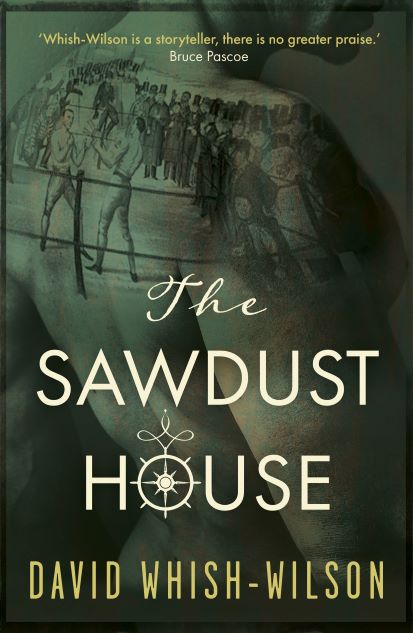
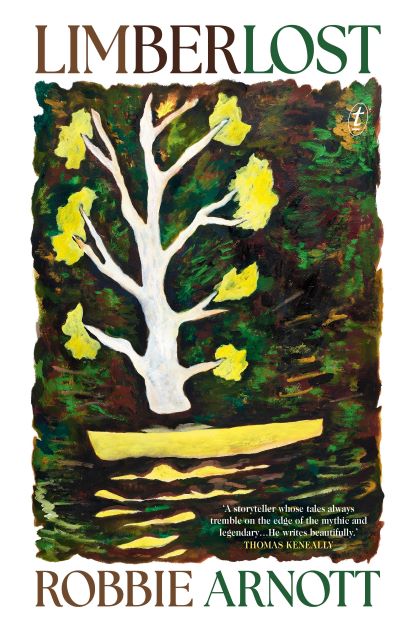
26th Oct: Robbie Arnott & David Whish-Wilson in conversation—Hobart

Robbie Arnott (author of ‘Limberlost’) and David Whish-Wilson (‘The Sawdust House’) in conversation about their new books.

Hobart Bookshop, 5:30 pm Wednesday 26th October


This is a double Author Event with David Whish-Wilson and Robbie Arnott talking to each other about their newly released books The Sawdust House and Limberlost.

The Sawdust House is a historical fiction set in San Francisco, 1856. Based on the true story of Australia’s first major sporting export, Irish-born James ‘Yankee’ Sullivan, a ‘notorious man’ formed in the crucible of the Australian convict system. Incarcerated by the Committee of Vigilance and watching his fellow prisoners being taken away to be hanged the convict tells a story of triumph and tragedy: of his daring escape from penal servitude in Australia; how he became America’s most celebrated boxer; and how he met the true love of his life.

In Tasmania in the heat of a long summer, Ned hunts rabbits in a river valley, hoping the pelts will earn him enough money to buy a small boat.  His two brothers are away at war, their whereabouts unknown. His father and older sister struggle to hold things together on the family orchard, Limberlost.  Desperate to ignore it all, Ned dreams of open water.  Ned’s choices that summer come to shape the course of his life, the fate of his family and the future of the valley, with its seasons of death and rebirth.

David Whish-Wilson is the author of eight novels and three creative non-fiction books. He has been shortlisted for the Ned Kelly Award on multiple occasions and Sawdust House was recently long listed for the 2022 ARA Historical Fiction Prize.

Limberlost is Robbie Arnott’s third novel after his acclaimed debut, Flames (2018), and Miles Franklin shortlisted The Rain Heron (2020).  Robbie Lives in Hobart.

About the event:

This is a ticketed event ($5.00) being held at The Hobart Bookshop on Wednesday the 26th October, where tickets include a complimentary glass of wine.


Alex Skovron on 3CR this morning

Alex in conversation with Di Cousens, recalling an early poetry submission….

“One of my very first submissions was from Sydney. It was to ‘Poetry Australia’, and at that time Les Murray was editing. I sent a bundle of poems representing those early ten years of my poetry writing but towards the later phase of that, poems I thought were good enough to try to submit. And Les Murray eventually sent back the bundle of poems with a wonderful comment, he said ‘I can’t quite like these enough, though there are felicities here’. That was in one way a rejection but in another it was encouragement. And I didn’t take it as a rejection, because I knew I had a fair way to go and I needed to refine not only what I was writing but my whole approach to poetry if I wanted to be serious about it.”

[3CR, the Spoken Word Show, 19th May 2022]

To Observe that Kind of Devotion: A conversation (Camille Dungy and Major Jackson — ‘Orion’)

(Published recently in US literary journal ‘Orion Magazine’: read the full interview)

Camille: One of the things that is most exciting to me about all the best writing going on right now, all politically engaged writing (and I think environmental writing has always been politically engaged) is how it requires a roving eye. A roving eye can work well at a distance far enough to accommodate a number of different nonrelated possibilities as data points, as touchstones, to show a kind of commonality. How a writer can connect firestorms and blizzards and tornadoes, and also questions about police, and whatever might happen in whichever elections are coming up, and how all of these themes are interconnected. And poetry is a place that through metaphor, through image, through just pure fantastical language, and the beauty of alliteration, you can gather these themes, these spinning planets that seem to be millions of miles apart, and make them into a connected galaxy. Poetry can bring all these seemingly disparate things into one space, and that’s one way it can be politically useful, can help change minds, can help us see ourselves differently, and expand how we understand the world.

Art can help both slowly and quickly. Major fast change can happen in response to writing. We have examples of that. But there are also those slow centuries-long glacial-pace changes, too. But glaciers shape landscapes, right? A glacial pace can be as important as a lightning-fast pace. I think that is the responsibility of poets, of editors—to be able to put the poems into place so they can spark change at any pace.

Camille T. Dungy has authored an essay collection and four poetry collections, most recently Trophic Cascade. She has edited three anthologies, including Black Nature. Dungy is a distinguished professor at Colorado State University, and Orion’s poetry editor.

Major Jackson is the author of five books of poetry, most recently, The Absurd Man. His edited volumes include: Best American Poetry 2019Renga for Obama, and Library of America’s Countee Cullen: Collected Poems. A recipient of fellowships from the Guggenheim Foundation and National Endowment for the Arts, he has been awarded a Pushcart Prize, a Whiting Award, and has been honored by the Pew Fellowship in the Arts and the Witter Bynner Foundation in conjunction with the Library of Congress. He is the Gertrude Conaway Vanderbilt Professor of English at Vanderbilt University, and the poetry editor of Harvard Review. He is also an Orion board member.