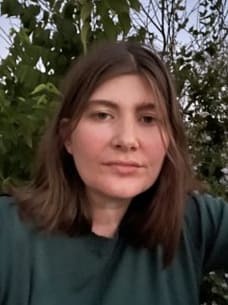
Enjoyed a thoughtful interview with Wurundjeri poet Alison J Barton recently, aired on 3CR’s Spoken Word program (08 August 2024)…. Indrani Perera spoke to Alison about her collection, ‘Not Telling’, Alison’s debut full-length poetry collection published by Puncher and Wattman.
Perera began by asking about the book’s ‘intriguing’ title…
The title came to me because the unifying theme of the collection is language and speech and in fact silence and not speaking. It’s also a bit of a play on a line in one of the poems in the collection. That’s the unifying theme, but the book is also broken into three sections and they’re quite distinct, the sections. I have one about colonisation and Aboriginal Australian history, one that’s really about family relationships and just indeed human relationships, and another section that has poems that are written around psychoanalytic theory. But yes, the unifying theme is language, speech and silence. You see that coming up in most of the poems, I think.
I know people don’t talk about favourite children, but do you have a favourite section in the book?
Ah, that’s a good question. I haven’t thought about that, actually. Yeah, maybe I do, but I don’t want to say. But no, look, there are poems in each section that I’m quite fond of. I think the sections are so distinct that it’s pretty hard to pick a favourite.
Fair enough.
’Buried Light’ is the first of the poems Alison read throughout the half-hour program, introducing the topic of colonisation in Australia – something that, growing up in the 80’s, ‘ just wasn’t a thing. The history that I learnt was so revisionist it was ridiculous’, says Barton. Perera wondered what it was like as a First Nations poet to have a residency at Oxford University. (In the past, Aboriginal human remains were often obtained by researchers – some associated with Cambridge – and frequently without consent. Aboriginal groups have long demanded the repatriation of remains – and some have been returned – but the process has invariably been slow, and often obstructive)
Yeah, look, it was a great experience but, of course, I was very aware of that contradiction in being there and also I’ve reflected on it a lot since the fellowship.
and there’s a great deal left unsaid here in an interview packed within a half hour program, though Puncher & Wattman’s website offers more of the book’s detail and its depiction of the
‘ongoing legacy of colonial dispossession and the strength of its survivors through representations of the wretched damage caused by the invasion of Australia, as well as musings on sacred land and celebration of continued culture. It testifies to the systemic oppression of Aboriginal people, connecting present-day black trauma with its origins. Jolted by the life realities of who we were, and are, alongside exacting accounts of genocide, the reader is immersed in a rich and harrowing world.’
…………………………………….
It was about five years ago that Barton took up poetry.
I sort of thought that I couldn’t write poetry so it was something that I didn’t explore until it suddenly came to me about five years ago and I just haven’t been able to stop ever since.
‘Do you know what it was that prompted that shift from prose into poetry?’
What actually happened is a poem just came to me and it’s very rare for that to happen now but it just spontaneously came to me and I wrote it down and I realised it was a poem and I literally have not stopped writing poetry since then.
So it basically snuck up on you and ambushed you?
Exactly. Yeah, that’s a good way of putting it. And there’s something sort of mystical I think about the creative process.
Alison I’m wondering what inspires you to write?
That’s such a big question. Basically everything.
I am in a daily writing practice, so I’m putting something on paper every day and, yeah, anything and everything, I would say.
So everything’s sort of grist for the mill?
I think so, yes. And while I write every day, it’s usually stream of consciousness writing that I then read over later and turn into poetry.
So when you write, is it in paragraph form or are you using dot points?
No, neither, I very much am writing in an endless stream. I have a journal, I use paper and pen and I use grammar sparingly, but there are no paragraph breaks. It’s a very continuous line of thought.
And how long do you do that for each day?
Ideally I would do it for an hour, at least an hour each day, but of course I don’t always get to do an hour. For me, even if I write for a few minutes, I’m happy that I’ve written something each day. Sometimes it’s much longer.
Do you find that doing it daily helps you to then form poems?
Yes. Well, it gives me a lot of material to go over later and turn into poetry, I think if I didn’t do that, I would produce much less poetry. There have only been a couple of times in my career where I’ve sat down with the intention of writing a poem and not using any material, any sort of written material that I’ve produced prior and a poem has just come to me spontaneously.
Usually it’s through great effort.
So is it like your shortcut or your secret hack to writing poetry, doing that daily practice?
Yes, I think that’s right, yeah.
I really envy you writing every day.
Thank you … for some people they need to write, they must write, but they have to force themselves and for me for some reason it’s actually a pleasure.
That’s fabulous.
That’s a great place to be in as a writer. I feel very lucky.
…………………………………….
Writing can be isolating, but a good writing group offers encouragement, honest feedback, and shared understanding. Being part of a writing group means you’ve people to push you to improve, keep you on track. Alison was questioned about whether she belonged to a writer’s group, ‘or do you have somebody that you share your work with and get feedback as you’re going?’
Yeah, I am in a writer’s group with three other poets, it’s only something that we’ve started recently, probably in the last year, I would say, and it’s incredibly useful for refining poems, sometimes I’ll take a poem to that group and I’ll think this poem needs a lot of work. This is in its very early stages. And then the group will surprise me and say, Alison, this poem’s ready.
I think what’s great about that group as well is that we’re all writers, we’re all poets, so we are honest with each other. If something needs work, you know, we want to get better and we want to help each other.
So yeah, there’s real trust in that group and I value that perspective. I feel like trust is be very important if you’re sharing work, especially poetry, which feels very personal.
I’m curious about your writing and if there are particular topics that you’re writing about.
In general, you mean?
Yeah.
No, I don’t, I really don’t restrict myself and I don’t want to force a poem about something. I have done that at times, but it’s kind of rare.
I think one of my early poetry mentors said to me something along the lines of, you have to let the poem be what it wants to be. And I think it’s very true. I think when I write a poem, it surprises me sometimes, you know, in subject matter sometimes or where it goes.
………………………………………………………………………………………………………………………………………………..
(To listen to the full recording, visit 3CR’s Spoken Word program).
Alison J Barton’s work has appeared in Australian and international journals and anthologies such as Meanjin, Cordite, Westerly, Mascara Literary Review, Australian Poetry Journal, Black Box Manifold and many more. In 2023 she was the inaugural winner of the University of Cambridge First Nations Writing Residence Fellowship. She has been the recipient of several fellowships with Varuna House and the winner of a number of international writing residencies. Alison’s poetry appeared in the Best of Australian Poems 2022 and 2023 and has been recognised in numerous prizes. She’s appeared in podcasts for the Guilty Feminist and Poetry Says.
Alison J Barton’s collection ‘Not Telling’ is available from Puncher & Wattmann retailing for $27.