GEORGINA WOODS
Launch | Lou Smith's poetry collection
'CLOUDBURST and CONSTELLATIONS'
Merri Creek Tavern, Northcote, Victoria | 15th December 2025
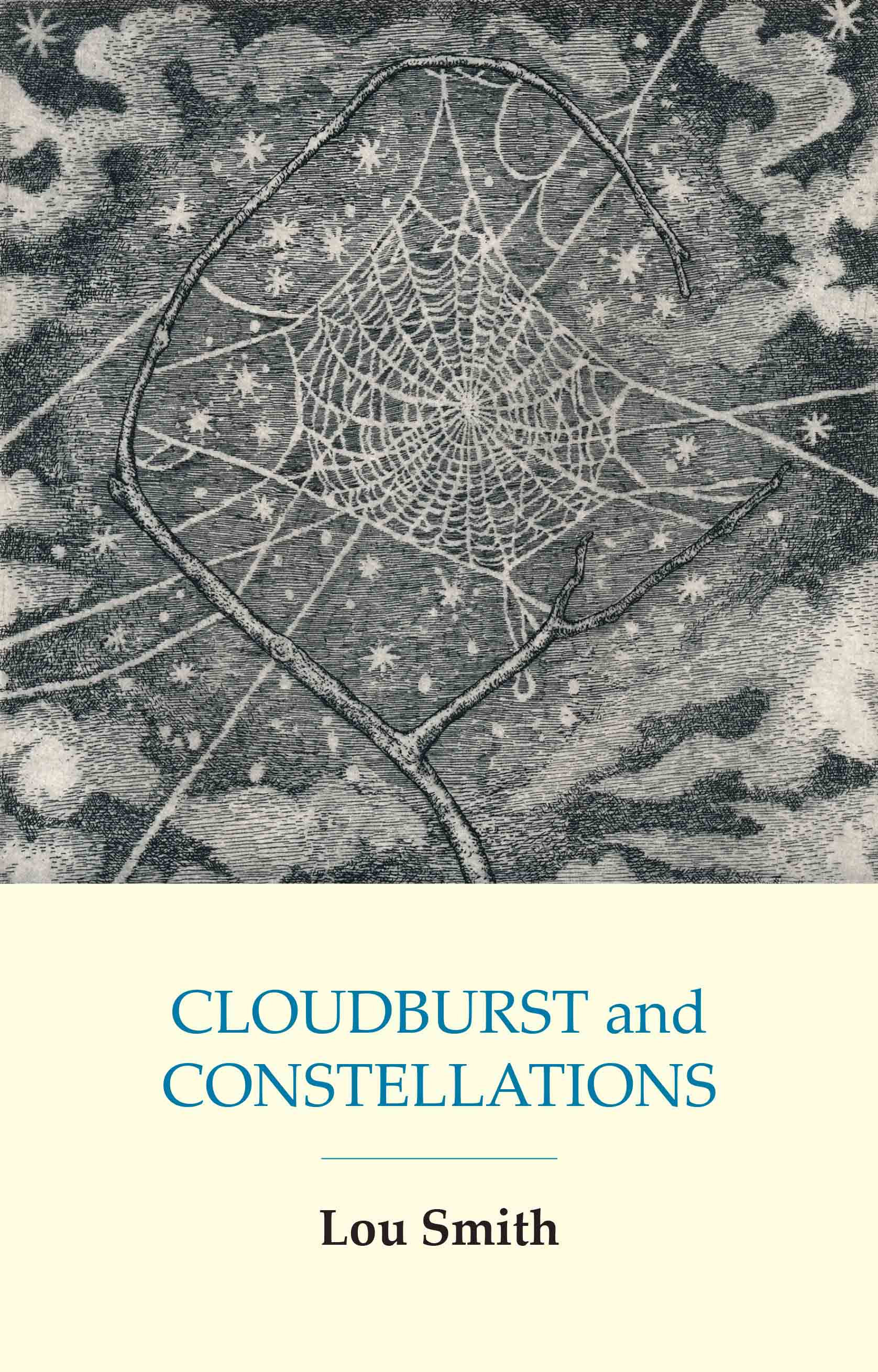
I’m delighted to launch this book because it brought me such delight to read it.
I was struck by how often the persona in these poems gets drenched. There are many downpours and torrents in this collection. A baby arrives
on a flood and a flood follows death as well. Lou gives expression to great waves of feeling and history in the form of rain, storms, floods
and ocean migrations – chosen and involuntary, life-making and life-destroying. In ‘After the Downpour’ rain makes colour vivid; in ‘Cloudburst’
it stops the journeyers and compels them to make camp; in ‘Belgrave Rd’ it makes people run; in ‘When the Rain Came’ it shows the poet London’s
ghosts; in ‘White Spill’ it shows us the toxic detritus of modernity. Water appears to the poet in other forms too, as mists, mud and tears.
‘Scrying’ is an old word for a form of divining insight by peering into the surface of water, That word came to me reading these poems that make
sense of the world by reading water forms. The sense Lou makes is personal, but not solely so. She tells what she sees in a way that the rest of us
know, too, even if we didn’t know it. That’s what poetry does. Crystallisation! Reading these poems, I felt the presence of a kindred sensibility,
overwhelmed by beauty, by love, by history, making common sense of experience in the quartz of the poet’s intensifying attention and then giving
these crystals to us, so that we may know her, know each other, know the places and the history that make us.
One of the fine things about this collection is its wholeness. It journeys far, in place and time, it experiments with form and voice and ranges
from the deeply personal to the dispassionately scientific. But in this range it draws variations together with recurring colours, images, phrases
that give a startling sense of recognition and continuity. So, we encounter two earthquakes in this collection and they reflect each other. There
is an exhibition held in London in a place called “Docklands” that evokes Port Royal but, in its name and in its blue stones also evokes Melbourne.
I felt, reading ‘Long Mountain House (College Common)’ like the poet feels, encountering familiar names in new places, touching the threads of colonialism,
migration, loss and story-telling in those echoes.
There are many mean by which she does this: the way all of the blues seem to speak to each other in these poems, for example.
The grease and rubbish in the sludge of Merri Creek speaks to the oily Thames and the plastic-laced ocean. Through these resonances,
too, language is harmonising. The child in ‘The Collector’ is, like the poet herself, learning and reciting scientific facts, but
they are doing so in a poetic register. Observing the spider’s shadows brings to science a cosmic sense of metaphor.
Lou’s different modes of expression are not in conflict, but like a far-flung ancestry, are all a part of her way-making and our own.